From Faith
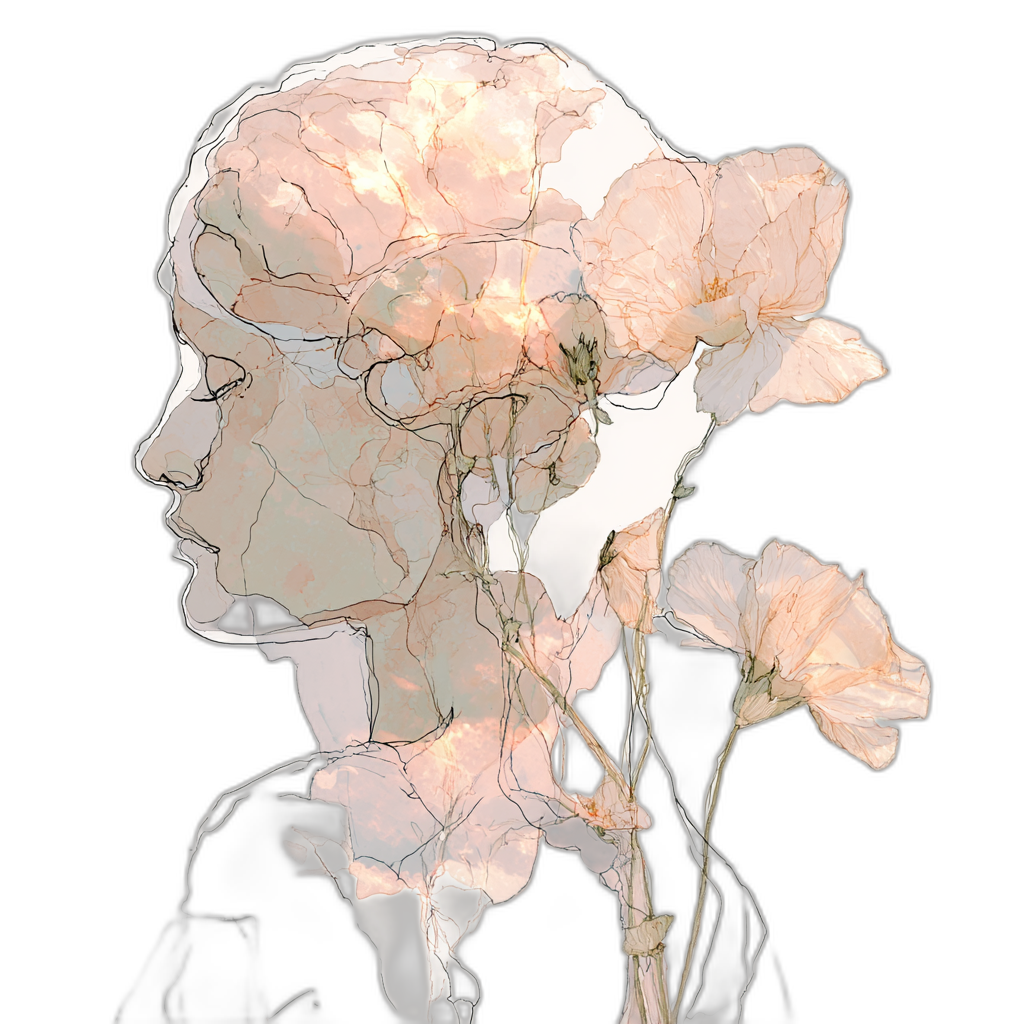
I had a headache for about three years. Not every day. Not the kind you go to hospital for. Just a tight, dull presence behind my right eye that would show up mid-afternoon, stay through dinner, and be gone by morning. I took ibuprofen. I drank more water. I got new glasses. I assumed it was screens.
It wasn't screens.
But it took me a very long time to even consider that it might be something else, because the explanation I had (stress, screens, too much coffee) was so reasonable. It made sense. It was the kind of thing any sensible adult would conclude, and I was very committed to being a sensible adult.
There's a thing that happens when you live in your head for long enough: the body becomes a sort of machine you maintain. You feed it, move it, notice when it breaks, fix what's broken. It's like a car. You don't ask a car how it's feeling. You check the dashboard lights and you respond to whatever's flashing.
I was excellent at dashboard lights. Pain meant something structural was wrong. Fatigue meant I needed more sleep. Tension meant I needed a massage. Every signal got routed to the most practical, least uncomfortable explanation, and then I fixed that explanation. Efficiently. Like a project.
What I couldn't see, and didn't want to, was that some of those signals weren't mechanical. The tight jaw wasn't about grinding my teeth in my sleep, or not only about that. The shallow breathing wasn't about posture. The headache behind my right eye wasn't about screen time. These were the body's way of speaking, and it was saying something more complicated than take a paracetamol.
I resisted this idea for a long time. It sounded, frankly, like something from the back of a wellness magazine. Your body is talking to you. Sure. And my elbow has opinions about my marriage.
But here's what I found when I started training in craniosacral therapy, and what I keep finding with clients: the body does hold things. Not metaphorically. Physiologically. Your nervous system records events that your conscious mind moved on from years ago. It stores them not as memories you can recall and narrate, but as patterns: a particular way of bracing, a place the breath doesn't reach, a contraction that activates in response to situations that shouldn't warrant it.
These patterns are efficient. Your system created them because, at some point, they were useful. The bracing protected you. The shallow breath kept you small when small was safe. The tension was a form of readiness. The body is not stupid. It doesn't hold things for no reason.
The problem is that some of those reasons ended a long time ago, and the pattern kept running.
Think of it like this. If you clench your fist for ten seconds, you know you're clenching your fist. If you clench it for ten hours, your hand starts to ache and you know something is wrong. If you clench it for ten years, you forget you're doing it. The clench becomes the hand. It's not a thing you're doing anymore. It's just how your hand is.
That's what I see in people who come to me. Not dramatic, visible tension. Something quieter. A holding pattern so old it has become part of the architecture. The shoulders that live slightly forward. The breath that never quite fills the bottom of the lungs. The particular quality of alertness that reads as normal but is actually a nervous system that hasn't fully stood down in a very long time.
They don't notice it. That's the whole point. You can't notice something that's been there longer than your ability to notice things.
What I wish I could tell my former self, the one with the ibuprofen and the sensible explanations, is that the body is not a machine. It doesn't just break and need fixing. Sometimes it's communicating, and the communication is inconvenient, and it doesn't come in words, and it won't stop just because you've taken something for it.
The headache behind my right eye turned out to be connected to a pattern of tension in my jaw, my neck, the whole right side of my face, that was connected to something much older than screen time. I know that now. I didn't know it then because I wasn't asking. I was answering, over and over, with the most comfortable answer available.
I work with a lot of people who are doing the same thing. Smart, self-aware people who have excellent explanations for everything their body is doing and who are getting quietly frustrated that the explanations keep not fixing it. They are thorough about it. Dedicated. And the body keeps asking the same question regardless.
What I keep wanting to say, and what I now know from the inside, is: what if the thing you're treating isn't the thing that's actually happening? What if the body isn't broken? What if it's just been asking you something for a long time and you've been too busy fixing it to listen?
That's not a comfortable question. It wasn't comfortable for me. But it turned out to be the right one.

Faith Lantz
If something in this rang true, a session might be the next step.